
Loading...
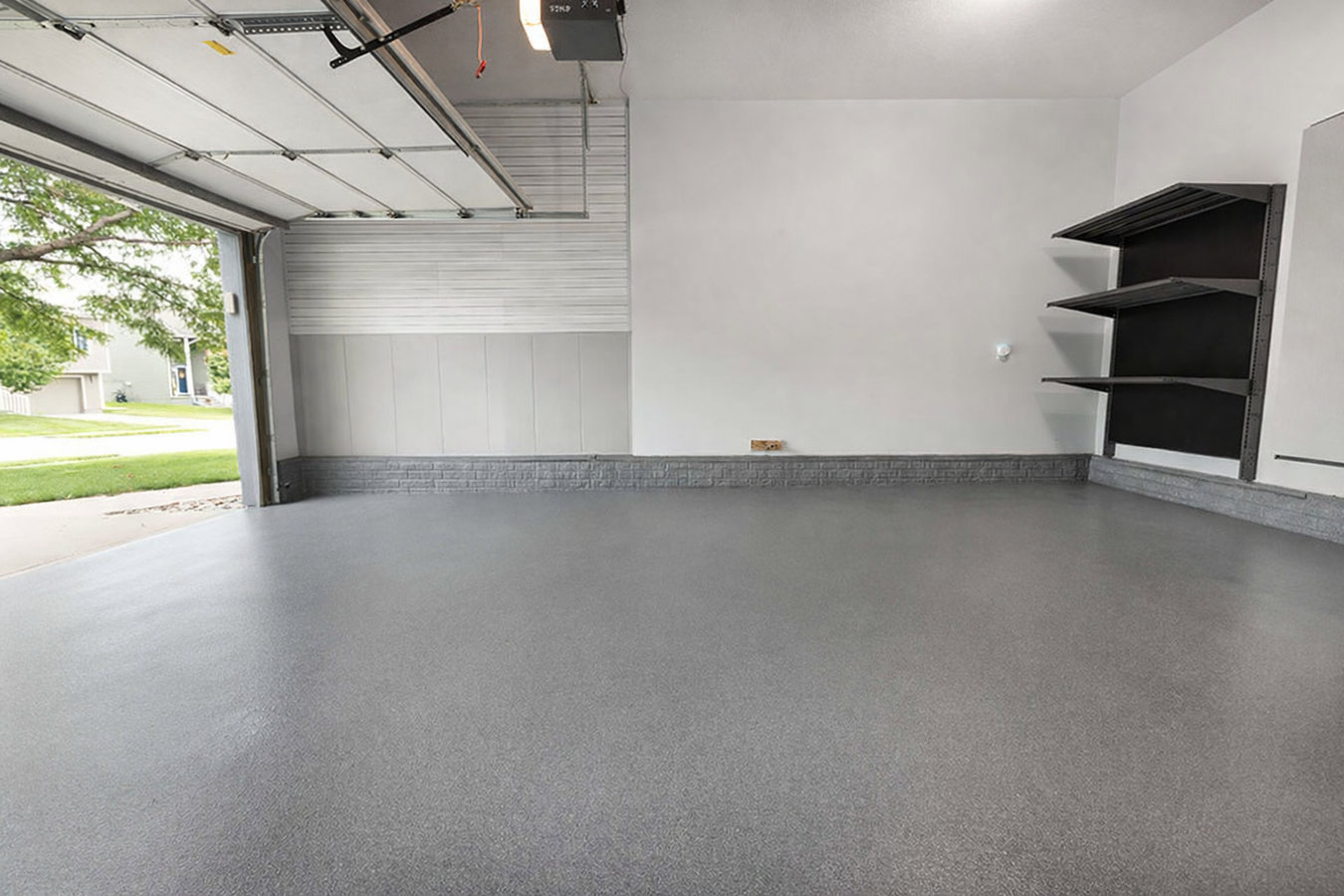
A cracked, hollow garage floor gets worse every Kansas winter. We replace slabs with the right base prep and thickness to handle freeze-thaw cycles and Riley County clay soils for years to come.
Garage floor concrete in Manhattan means removing the old slab, grading and compacting the base underneath, and pouring fresh concrete that hardens into a solid, level surface - most full replacements take one to two days of work, with vehicles staying out for about a week while the concrete cures.
If your garage floor has cracks that keep coming back, spots that feel hollow underfoot, or a surface that flakes a little more each winter, those are signs the slab - and often the soil beneath it - have reached the end of their useful life together. Patching the surface is a short-term answer. A full replacement with proper base preparation is what actually solves the problem.
Many homeowners in Manhattan who are replacing a garage floor also ask about decorative concrete finishes, which can give a new garage floor a polished, finished look while maintaining the same durability.
Small hairline cracks are common and often harmless. But if you can fit a pencil tip into a crack, or if a crack has been getting longer over the past year or two, the slab is being pushed by something underneath - usually soil movement or freeze-thaw damage. Patching a crack like this is a short-term fix; the underlying cause will keep working against the repair.
If the top layer of your garage floor is peeling away in flakes or developing small pockmarks, that is spalling - a process accelerated by road salt and repeated freeze-thaw cycles, both common in Manhattan winters. Once spalling starts, it tends to spread, and a heavily spalled floor cannot be fully restored with a coating alone.
A properly poured garage floor slopes slightly toward the door so water runs out. If a puddle forms in the same spot every time it rains or you wash the car, the floor has settled unevenly or was poured without the right slope. Standing water speeds up surface damage and can seep under the slab over time.
Walk across your garage floor and listen. If you hear a dull, hollow sound in certain spots, or if the floor feels slightly springy underfoot, the soil underneath may have shifted or washed away, leaving a void below the slab. This is more serious than surface cracking and usually means the affected section needs full replacement rather than patching.
Every garage floor project starts with an in-person visit to look at the existing slab and the soil conditions underneath. We handle the full process: permit filing with the City of Manhattan or Riley County, demolition of the old slab, base grading and compaction, reinforcement installation, the pour, finishing, and control joint cutting. We also apply or recommend a sealer suited to Kansas winters, where road salt tracked in on tires is one of the fastest ways to damage an unprotected concrete surface.
For homeowners looking to upgrade beyond a plain gray slab, we can connect garage floor work with our decorative concrete services, including sealed and colored finishes, and with our concrete floor installation work for interior spaces that need the same durability standard. The preparation steps are nearly identical - you are not paying to solve the same problem twice.
Best for most residential garages needing a full new four-inch slab.
For garages used as workshops, or where trucks, RVs, or heavy equipment are parked.
For floors that currently pool water or slope toward the interior rather than the door.
For homeowners who want a protected floor that resists oil stains and road salt from day one.
Manhattan sits in a climate zone where temperatures regularly drop below freezing from November through March - and sometimes swing above and below freezing multiple times in a single week. Every freeze-thaw cycle pushes moisture through any weak point in your slab, expanding as it freezes and widening cracks each time. On top of that, much of Riley County sits on expansive clay soils that swell when wet and shrink when dry. Those two forces together - freeze-thaw from above and soil movement from below - are why garage floors in established Manhattan neighborhoods near Kansas State University fail faster than in other parts of the country. Road salt tracked in on tires adds a third threat, attacking the concrete surface from the top. A properly sealed floor slows that process significantly.
We serve homeowners throughout Manhattan and the surrounding region. Customers in Junction City and Salina deal with the same soil and climate conditions - and the same permit requirements that apply to full slab replacements. The most reliable window for pouring a garage floor in this region runs from late spring through early fall, when temperatures stay moderate and curing conditions are predictable.
We respond within 1 business day. We ask about your garage size, the problems you are seeing, and whether you are looking at a full replacement or resurfacing - then schedule a free on-site visit to look at the floor.
We inspect the slab and the subbase condition, measure the area, and give you a written estimate. For a full replacement, we file the building permit with the City of Manhattan - you do not need to visit the permit office yourself.
We break out and haul the old slab, grade and compact the soil base, install wire reinforcement, and pour the new concrete. Control joints are cut before the slab fully sets to manage where any future cracking occurs.
You can walk on the floor lightly after about 24 hours, but keep vehicles out for a full 7 days. A city inspector signs off before the permit closes. We walk through the finished floor with you before we leave.
We respond within 1 business day - no obligation, no pressure. After you submit, someone from our team will call to schedule a free on-site look at your floor.
(785) 236-2117Full slab replacements in Manhattan require a City of Manhattan or Riley County building permit - full stop. We pull that permit on every qualifying job, so your project is inspected and documented. That protects your investment and gives you clear records if you ever sell the home.
Clay soils are the leading cause of cracked and settled garage floors in this area. We compact the subbase and add a proper drainage layer before every pour. Skipping that step is what causes most callbacks - and we do not skip it.
We work in Manhattan and surrounding Riley County communities, which means we know the local permit process, soil conditions, and what standard two-car garages in established neighborhoods actually look like. We are not a traveling crew passing through.
Manhattan winters are hard on unprotected concrete. We use air-entrained concrete mixes rated for freeze-thaw exposure - recommended by the American Concrete Institute for cold-climate slabs - and apply or recommend a quality sealer that slows salt and moisture intrusion before the first winter hits.
We bring the same attention to every garage floor project: a properly prepared base, the right mix for this climate, and permitted work that an inspector signs off on before we consider the job done. That is the standard we hold to, whether the garage is 400 square feet or 700.
For Kansas building code requirements and contractor licensing standards, see the City of Manhattan Building Inspection Division and the Kansas Department of Labor.
Add color, texture, or a polished finish to your new garage floor or any other concrete surface around your home.
Learn moreInterior concrete floors for basements, workshops, and utility spaces installed to the same durability standard as our garage slabs.
Learn moreFreeze-thaw damage gets worse every season - call Custom Manhattan Concrete today and let us come take a look before the fall booking rush fills our schedule.