Loading...
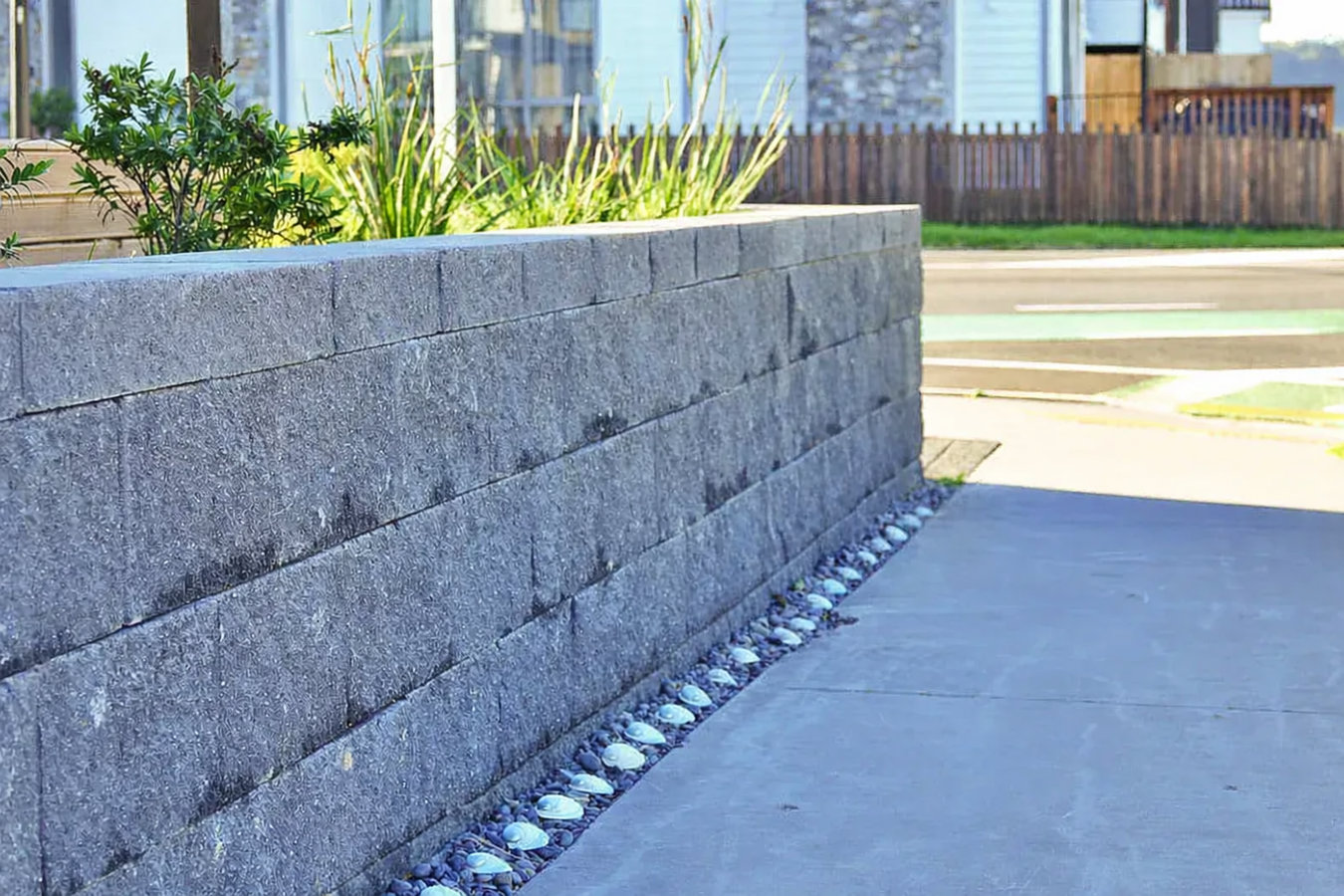
If your slope is washing away or your existing wall is leaning, a properly built concrete retaining wall gives you a lasting fix that holds through Kansas winters.
Concrete retaining walls in Manhattan hold back soil on sloped or uneven lots, keeping it from sliding, washing away, or pushing toward your foundation - most residential wall projects run two days to two weeks depending on length, height, and site conditions. A well-built wall also manages water pressure that builds up behind it after rain, using drainage gravel and weep holes to let water escape before it cracks or topples the wall.
Manhattan homeowners often call us after a wet spring when they see a slope eroding, an existing wall starting to lean, or water collecting near the house instead of draining away. Concrete walls outlast timber and block alternatives by decades and do not warp, rot, or shift under the weight of our clay soils. If your project involves steps leading up a grade, our concrete steps construction service is often paired with wall work for a complete solution.
For commercial or residential projects where finished surfaces matter, we can tie retaining wall work in with our concrete floor installation services to coordinate the full scope under one contract.
Bare dirt, exposed roots, or small gullies forming on a hillside after spring rain are signs the slope is actively eroding. In Manhattan's clay-heavy soil, this process accelerates quickly - what looks like a minor washout in April can become a significant problem by fall. Once the erosion path is established, each rain event widens it.
A wall that is no longer plumb is telling you the pressure behind it has exceeded what it can handle. This is especially common in Manhattan after a wet spring, when saturated clay soil expands and pushes hard against structures. A leaning wall does not stabilize on its own - it can fail suddenly rather than gradually, so acting early is important.
If rainwater collects against your house instead of draining away from it, a slope or grade problem is likely the cause. A retaining wall combined with proper grading redirects that water before it causes basement moisture or long-term foundation damage. This is a common issue in Manhattan neighborhoods near the Big Blue River corridor.
If part of your yard is too steep to mow safely, too unstable for children, or just wasted space because of the grade, a retaining wall can create a flat, usable terrace. Many Manhattan homeowners in hillside neighborhoods - particularly in the Bluemont and Westloop areas - have reclaimed backyard space this way.
We build cast-in-place concrete retaining walls from the footing up - excavating to the required depth, setting forms, pouring with reinforced concrete, and installing the drainage layer behind the wall before backfilling. Every wall includes drainage gravel and weep holes to manage groundwater pressure, which is especially important in Manhattan's expansive clay soils. Walls can be left with a plain finish or formed with texture and color to look like stacked stone or brick. For homeowners who want a finished look throughout their yard, we can also pair wall work with our concrete floor installation service for patios, walkways, or basement slabs adjacent to the wall area.
When a wall is taller than four feet, Manhattan requires a permit and the footings must be set below the local frost line - typically 18 to 24 inches. We handle the permit application, coordinate the city inspection, and build to that depth standard on every qualifying project. For projects that also involve grade changes requiring steps, our concrete steps construction work is often folded into the same project scope so the finished grade change looks and functions as one cohesive system.
Best for homeowners with an eroding slope, drainage problem, or grade change that needs a permanent structural solution.
Best for homeowners whose existing timber, block, or concrete wall is leaning, cracking, or has lost its drainage behind it.
Best for hillside yards where a single tall wall would require extensive engineering - two or three shorter terraced walls are often more practical and visually appealing.
Best for homeowners who want the strength of concrete but a surface that looks like natural stone or brick rather than plain gray block.
Manhattan's rolling terrain - particularly in neighborhoods like Westloop, Bluemont, and areas near Wildcat Creek - creates significant grade changes that make retaining walls a genuine necessity for many homeowners, not just a landscaping upgrade. The Flint Hills clay soil surrounding the city swells when wet and shrinks when dry, applying far more lateral pressure against a wall than the sandy or loamy soils common elsewhere in Kansas. A contractor who has not worked here may underestimate both the drainage requirements and how deep footings need to go to stay below the 18-to-24-inch frost line that Manhattan winters demand.
Spring is when we get the most calls - Manhattan's wet springs are exactly when slope erosion shows up or gets worse, and contractors book quickly once the rains start. We serve homeowners across the region, including Junction City to the west and Leavenworth to the east. The City of Manhattan Building Inspection office requires permits for walls over the height threshold, and the Kansas 811 utility marking service is called before any excavation begins - both are standard steps on every project we run.
We ask a few basic questions - how long and tall the wall needs to be, whether there is an existing wall, and whether you have noticed drainage issues. Then we schedule an on-site visit, because no honest price can be given without seeing the slope, soil, and access. You will hear back within one business day of your inquiry.
We walk the property with you, looking at slope angle, how water moves across the site, and whether underground utilities are nearby. We check for any existing drainage problems that need to be part of the solution. This visit is your chance to ask questions and understand exactly what the project will involve before you agree to anything.
For walls over four feet, we submit the permit application to the City of Manhattan's building department before any work begins. This typically takes a few days to a couple of weeks. We handle this process and keep you informed - you do not need to navigate city hall yourself. Factor this into your timeline if you are working toward a specific date.
We mark utilities through Kansas 811, excavate the footing trench to the required depth, pour the footing, form and pour the wall, and install drainage gravel and weep holes as backfill goes in. After the work passes inspection, we clean up the site. The concrete reaches full strength over the following weeks, but you can landscape around the wall well before then.
Free on-site estimate. We handle permits and utility marking. No upfront payment required.
(785) 236-2117Every retaining wall footing we pour is set below the 18-to-24-inch frost line that Riley County winters demand. This is not an optional upgrade - walls with shallow footings heave out of position as the ground freezes and thaws, and they fail well before their time. Getting the footing depth right from the start is what separates a wall that holds for 40 years from one that needs replacing in a decade.
We install gravel backfill and weep holes on every wall as a standard part of construction, not as an extra line item. Manhattan's clay soils hold water and build up hydrostatic pressure behind any structure - a wall without proper drainage is under far more stress than it was designed for. Handling drainage correctly at the time of construction is always less expensive than fixing a leaning wall later.
We have worked with the City of Manhattan's building inspection process on retaining wall permits and know what the city inspectors check at each stage. We submit the application, coordinate the inspection visit, and make sure the finished wall passes the first time. Your property record stays clean, and you have documented proof the work was done to code - which matters when you sell your home.
We have built concrete retaining walls across Manhattan and throughout the surrounding region, from Junction City to Topeka. That range of projects means we have worked in varied soil and terrain conditions and understand how the Flint Hills geology affects wall performance. For deeper reading on drainage design in retaining structures, the American Concrete Institute publishes the standards we follow.
Retaining walls are one of those projects where cutting corners on footing depth or drainage shows up within a few seasons rather than staying hidden. We build to the standards that Manhattan's soil and climate actually require - so the wall you get is one you will not be dealing with again.
Pour or replace a basement, garage, or utility slab with a flat, sealed floor built to handle Kansas winters and Riley County clay soils.
Learn moreAdd safe, durable entry or landscape steps that connect grade changes created by your retaining wall to the rest of your yard.
Learn moreSpring books fast in Manhattan - call now or request a free estimate online to lock in your project date.