Loading...
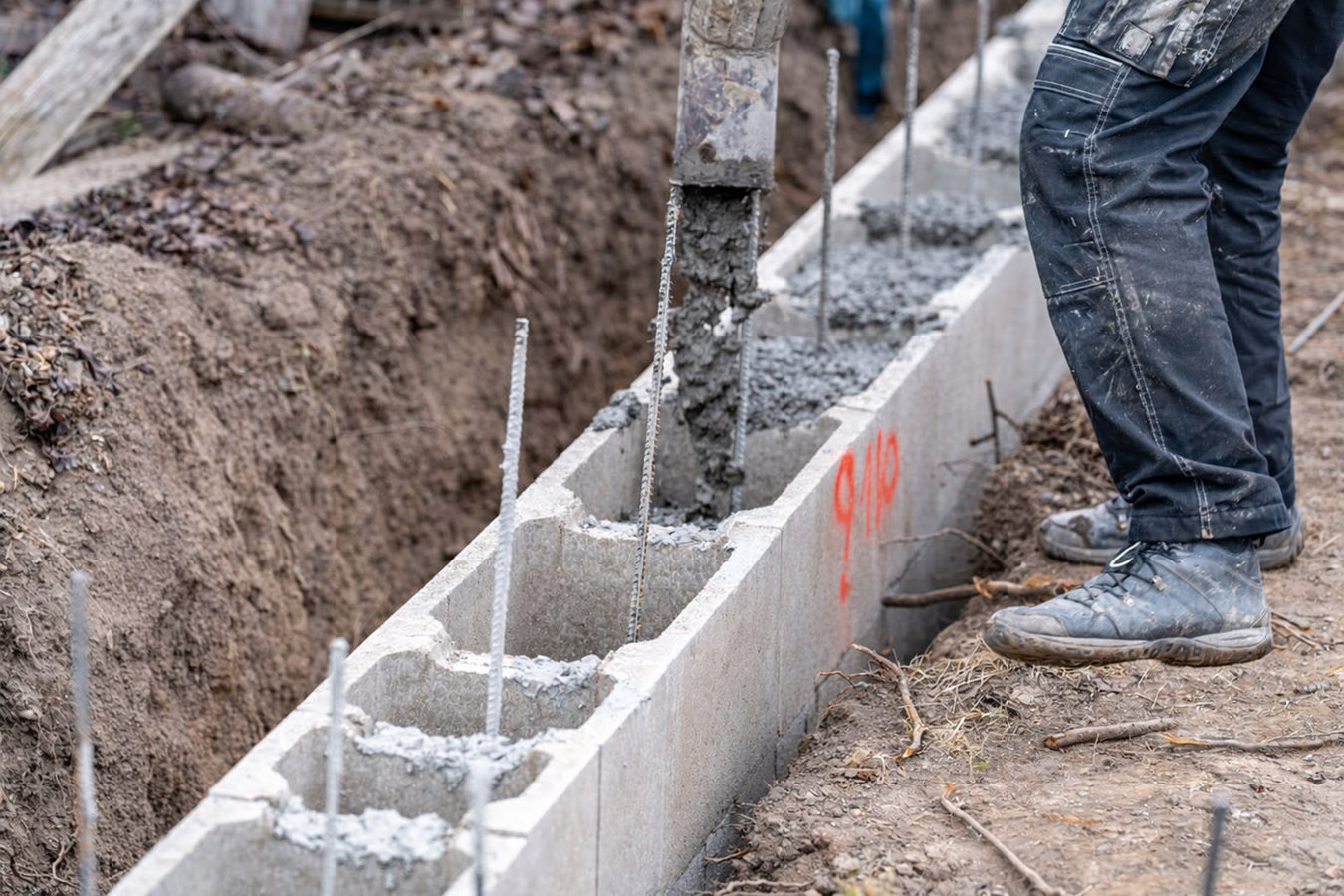
Sunken driveways, tilted patios, and settled garage floors are common in Manhattan - we lift them back to level without tearing anything out.
Foundation raising in Manhattan, KS lifts sunken concrete slabs back to their original level by filling the voids underneath - most residential jobs on a driveway section, patio, or garage floor are completed in a few hours, and you can use the surface again the same day. The process involves drilling small holes through the slab, pumping material underneath to fill the hollow space, and patching the holes when the lift is complete. It costs a fraction of full replacement and causes almost no disruption to your property.
Manhattan homeowners call us for foundation raising when a slab has settled but the concrete itself is still structurally sound. That covers sunken driveway panels, tilted patios, settled garage floors, and uneven sidewalk sections that have become a trip hazard. If your project also involves structural work below grade, we can assess it alongside a slab foundation build or a concrete cutting scope and give you a single written estimate covering everything.
Not every sunken slab can be saved - if the concrete is crumbling or broken into pieces, replacement is the honest recommendation. We will tell you which one makes sense before any work begins.
If one section of your driveway, patio, or garage floor moves slightly when you step on it, there is almost certainly a void underneath. That hollow feeling means the concrete has lost its soil support and is essentially floating. Left alone, that section will continue to drop and may crack under the weight of a vehicle or heavy rain.
After a dry Kansas summer, the clay soil around your home shrinks and pulls away from structures. If you see a gap opening up between your driveway and your garage apron, or between a sidewalk panel and the curb, the soil underneath has likely shifted. That gap is a sign the slab has already moved and will continue to do so.
Concrete is poured with a slight slope so water runs off. When a slab sinks on one side, that slope reverses and water sits - which then soaks into the soil and makes the settling worse over time. If rainwater collects on your driveway, patio, or walkway instead of draining away, the surface has probably tilted.
Diagonal cracks starting at a corner of a driveway or patio panel are a classic sign of differential settlement - one part of the slab has dropped more than another. This type of crack is different from the straight shrinkage cracks that appear in the middle of a slab. A diagonal corner crack means the slab is under stress and needs attention before it breaks apart entirely.
We offer both mudjacking and polyurethane foam injection for residential slab lifting in Manhattan. Mudjacking pumps a cement-and-soil slurry beneath the slab through small drilled holes, filling the void until the concrete rises back to level. It is a proven method with a long track record and suits most standard residential jobs. Foam injection uses an expanding two-part polyurethane that fills voids and hardens quickly - the holes are smaller, the cure time is faster, and it works well in tighter spaces or where you need to walk on the surface sooner. We will recommend the right method for your specific slab and soil conditions after the on-site assessment. Both options are paired with a written estimate before any drilling begins, and both include a drainage review so we are not just treating the symptom. If the scope connects to a larger project - such as a new slab foundation build or work that requires concrete cutting to remove a damaged section - we assess everything in one visit.
We work on all types of residential slabs: driveways, patios, garage floors, walkways, and porch slabs. For homeowners in Manhattan's older neighborhoods near Kansas State University, where slabs were often poured on poorly compacted soil in the 1950s through 1980s, we take extra care during the assessment to identify how much void space exists and whether the slab is worth lifting or needs to come out. If replacement is the right call, we say so before the crew picks up a drill.
Best for most standard residential slabs - driveways, patios, and garage floors where cure time is flexible and cost-efficiency is the priority.
Best for situations where you need a faster cure, smaller drill holes, or lighter-weight fill material that puts less stress on an older slab.
Best for uneven sidewalk sections on private property that have become a trip hazard after years of freeze-thaw movement.
Best for front porches, entry slabs, and step bases that have settled away from the house and need to be brought back flush.
Manhattan sits on a combination of silty clay and clay-heavy soils common to the Flint Hills region of northeast Kansas. These soils swell when wet and shrink when dry, which means the ground under your slab is in constant motion with the seasons. Add in Manhattan winters - where temperatures regularly drop well below freezing and the ground can freeze to a depth of 18 to 24 inches - and you have two forces working against every concrete slab on your property at the same time. That repeated freeze-thaw movement is one of the leading reasons slabs sink here, and it is also why addressing drainage around a raised slab is just as important as the lift itself. A slab raised without fixing the drainage problem nearby will settle again, typically within a few seasons. Homes in established neighborhoods like Westloop and Northview, and especially those near Kansas State University where slabs were poured in the 1950s through 1980s, have had decades for this process to do its work - and many are overdue for a proper assessment.
We serve homeowners throughout Manhattan and the wider area, including Junction City and Salina. Every lifting job we take on follows guidelines from the American Concrete Institute for slab repair and is assessed with full knowledge of the local soil conditions and permit requirements through the City of Manhattan Community Development office.
When you call, we ask a few basic questions - what kind of slab it is, roughly how much it has settled, and whether you have noticed any cracking. Most Manhattan homeowners hear back within one business day, and we schedule an on-site visit within the week.
We walk the area with you, check how much the slab has settled, look for drainage problems, and assess whether the concrete is a good candidate for lifting or needs to be replaced. You receive a written estimate covering the full scope before any work is scheduled - no ballpark numbers over the phone.
The crew drills small holes through the slab at strategic points, then pumps material underneath until the slab rises to the correct level. The lift is monitored carefully - raising it too fast or unevenly can crack concrete that would otherwise be salvageable. A typical driveway section or patio takes two to four hours.
Once the slab is level, we fill and patch the drill holes with a concrete mix, clean the work area, and walk you through what to watch for in the weeks ahead. You can typically walk on the surface within an hour or two and drive on it within a few hours for mudjacking - or sooner for foam lifting.
We will walk the area with you, give you a written price, and tell you honestly whether lifting or replacement makes more sense - no sales pitch, no obligation.
(785) 236-2117Every foundation raising job starts with a written estimate that covers the full scope - no surprise additions to the invoice once work begins. If something unexpected comes up during the assessment, we tell you before we start. That standard holds whether the job is a single driveway panel or a full porch slab.
Manhattan's clay-heavy soils and hard winters create conditions that cause lifting jobs to fail when drainage is not addressed alongside the repair. We evaluate drainage on every job and flag issues that would cause the slab to settle again - because a lift that does not hold is not a fix.
You should not have to block off your driveway for a week or reroute your family around a torn-up patio. Most foundation raising jobs we complete in Manhattan are done in a single visit, and homeowners can drive on the driveway or walk on the patio again before the end of the day - a timeline that full replacement cannot match.
We work in Manhattan and throughout Riley County year-round, which means we know the neighborhoods - from the older homes near K-State where slabs were poured on poorly compacted fill, to the newer subdivisions on the west side where drainage patterns vary by lot. That local knowledge shapes how we approach every job. Licensed and insured in Kansas.
Every foundation raising project we take on is assessed with the soil conditions, drainage, and local seasonal patterns of Manhattan in mind. Our goal is a result that stays level - not one that brings you back in two years with the same problem.
When a slab is too far gone to lift, we cut out the damaged section cleanly so a new pour can go in without disrupting surrounding concrete.
Learn moreFor new construction or full replacements, we pour a properly reinforced slab foundation from the ground up to current Manhattan standards.
Learn moreManhattan's busy season fills up fast - call now or request a free written estimate before your spring schedule closes out.