Loading...
Cracked slabs, basement floor openings, and utility access cuts handled with diamond-blade precision - only what needs to go comes out.
Concrete cutting in Manhattan, KS uses diamond-blade saws to remove damaged sections, create openings for drains and utility lines, or resize slabs with precision - a straightforward cut on a driveway or basement floor typically takes a few hours to a full day, and the area is usable again within 24 to 48 hours for foot traffic. The goal is a clean, controlled cut that takes out only what needs to go without cracking or chipping the surrounding concrete. That matters whether you are removing a single damaged panel from a cracked driveway or opening a basement floor to add a drain for a bathroom you are finishing.
Manhattan homeowners call us for concrete cutting when freeze-thaw damage has gone past the point of patching, when a slab has heaved enough to create a trip hazard, or when a basement or garage project requires a precise opening in an existing floor or wall. Work that follows from a cutting job - such as new concrete floor installation or a fresh concrete driveway build - is something we can assess and estimate alongside the cutting scope in a single visit.
Permits are required for certain types of cuts - particularly those involving utility access or structural changes. We handle that paperwork so you do not have to figure out the process yourself.
Small hairline cracks are often cosmetic, but when a crack is wide enough to catch your finger or a coin, the slab has shifted enough that patching alone will not hold. In Manhattan, this kind of damage is often caused by the clay soil shifting under the slab over multiple wet and dry seasons. Cutting out and replacing the damaged section is usually the right fix at this stage.
When part of a driveway, patio, or walkway has heaved up or sunk down, it creates a trip hazard and signals the ground underneath has moved. This is especially common in Manhattan older neighborhoods where clay soils have had decades to shift. A contractor will often need to cut out the affected section, address the base, and pour a new section to bring everything level.
Any time a new opening needs to be created in a concrete floor or wall, cutting is the right approach - not breaking. If you are finishing a basement, adding a bathroom, or installing a sump pump, your contractor will need a clean, precise opening. Concrete cutting is what makes that possible without damaging the rest of the slab.
Garage floors in Manhattan homes often develop cracks that run parallel to or toward the overhead door opening, especially in homes more than 20 to 30 years old. These cracks tend to grow over time as vehicles drive over them. Cutting along the crack line, removing the damaged section, and patching it properly stops the damage from spreading and keeps the floor safe.
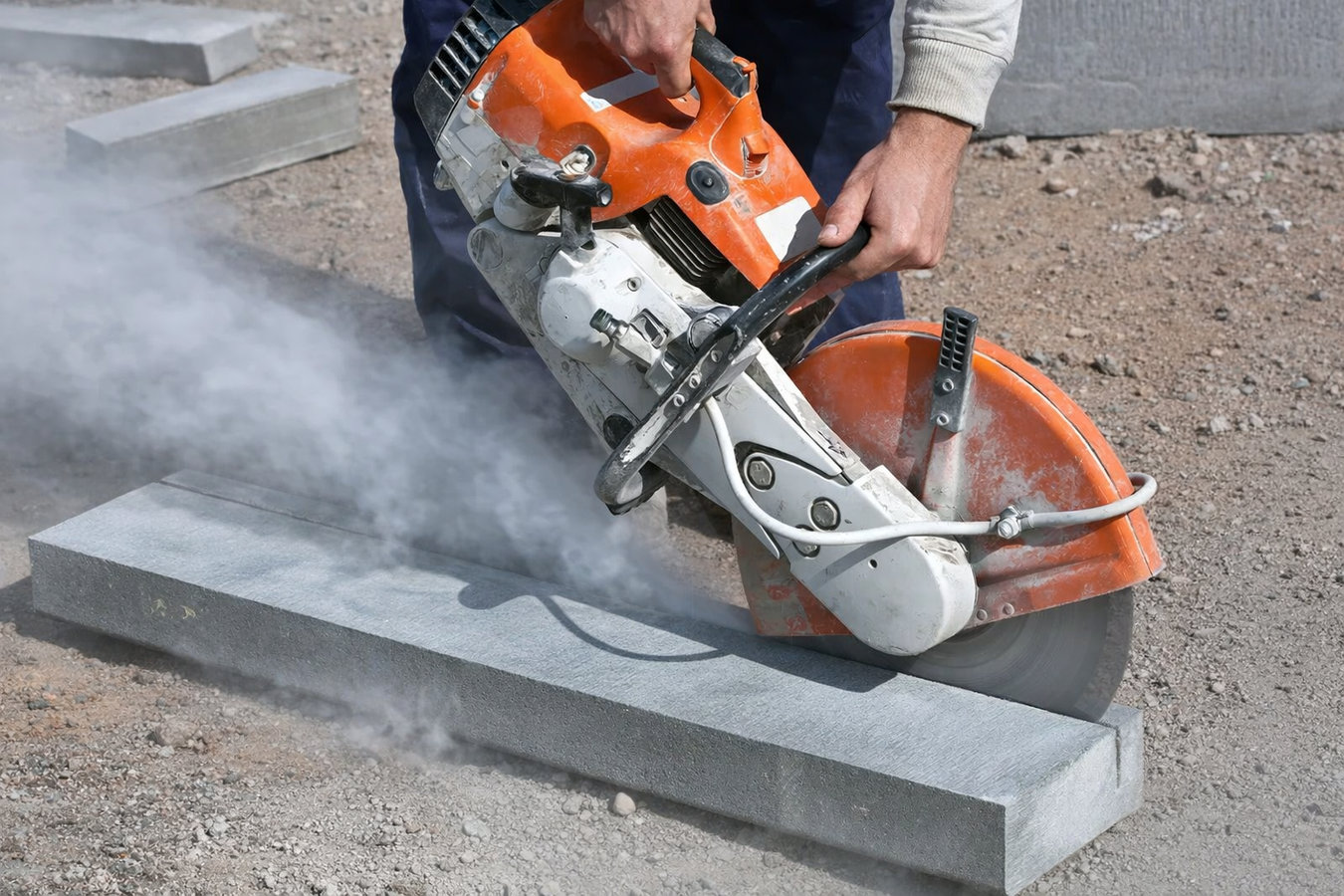
We use walk-behind flat saws for driveway, patio, and floor cutting, and handheld diamond saws for walls and tighter spaces. Both use diamond-tipped blades that cut cleanly through concrete without shattering the surrounding material - which is why cutting is always the right approach over jackhammering when precision matters. Every exterior cut is done with water to suppress silica dust, in line with OSHA silica safety standards. Cleanup of the slurry and debris is part of the job on every project - not an optional add-on. For utility-related cuts, we handle the permit application through the City of Manhattan so your project stays on the right side of local requirements from the start. When the cutting scope connects to follow-on work - such as new concrete floor installation or a replacement driveway build - we assess and price both phases in one visit.
For older Manhattan homes - particularly those in neighborhoods near K-State built before the 1980s - we check the slab thickness and condition before cutting begins. Older slabs can be thinner than current standards and more brittle, which changes the approach. We flag that during the estimate visit, not after the saw is running.
Best for damaged driveway panels that have cracked, heaved, or shifted past the point where patching will hold - cuts out only the damaged section so the rest of the drive stays intact.
Best for homeowners finishing a basement and needing a precise opening for a drain, sump pit, or utility access without disturbing the rest of the floor.
Best for exterior slabs where freeze-thaw damage or soil movement has created a section that is beyond simple repair and needs to be removed and replaced.
Best for projects requiring an opening through a concrete foundation wall - egress windows, utility penetrations, or access points - using handheld diamond saws for controlled cuts in vertical concrete.
Manhattan sits in a climate zone where temperatures drop well below freezing every winter and climb into the 90s in summer. That repeated freezing and thawing causes concrete to expand and contract continuously, which over time creates cracks, heaving, and surface deterioration faster than in milder climates. Add in the clay-heavy soils of Riley County and the Flint Hills region - which swell when wet and shrink when dry, pushing slabs up and pulling the ground away from them as seasons change - and you have conditions that put every concrete surface on a clock. Many homes in Manhattan established neighborhoods like Westloop and Northview were built in the 1950s through 1980s, and the concrete poured during that era often sits on soil that was not compacted to modern standards. Decades of movement have had time to do real damage, and cutting is frequently the right call once that damage reaches the point where patching no longer makes sense.
We serve homeowners throughout Manhattan and surrounding areas, including Junction City and Abilene. Contractors working in this region should be familiar with the City of Manhattan permit requirements for utility-related cuts, and Kansas law requires an 811 utility locate call before any outdoor cutting that could reach buried lines.
When you reach out, we ask what you are trying to accomplish, where the concrete is, and roughly how old the home is. You do not need all the answers - just describe what you are seeing and we will guide the rest. Most callers hear back within one business day and we schedule an on-site visit within the week.
We measure the area, check the concrete thickness, and assess what is underneath. You receive a written price before work is scheduled. If your project requires a permit through the City of Manhattan Community Development office, we handle the application - you should not have to navigate that process yourself.
The crew sets up, wets the cut line to control dust, and makes the cuts with diamond-blade saws. For most residential jobs, the cutting itself takes a few hours. You will hear the saw and see water and gray slurry on the surface. Once cutting is done, the crew cleans up the slurry and debris before leaving - that is part of the job, not an afterthought.
Once any utility or structural work is complete, the open area is filled and patched with fresh concrete. Before the crew leaves, we walk through the work together and give you a specific curing timeline - plan on 24 to 48 hours before foot traffic and at least a week before driving on an exterior patch. No vague estimates.
We will come out, look at the job, and give you a clear written price - no obligation, no sales pitch, and permit handling included when the job requires it.
(785) 236-2117The City of Manhattan requires permits for utility-related concrete cuts, and finding that out mid-project stalls everything. We identify permit requirements at the estimate visit and handle the application before work begins - so your project starts on time and stays compliant with local rules. That matters whether you are finishing a basement or accessing a utility line.
Diamond-blade sawing removes only what needs to go. The concrete left standing stays intact and undamaged - no jagged edges, no unintended cracking spreading outward from the cut line. This matters most in older Manhattan slabs, where the surrounding concrete may already be under stress from decades of soil movement and freeze-thaw cycles.
Riley County clay soils are the root cause of most repeat concrete failures in Manhattan. Before we cut and patch, we assess the base conditions so the repair does not crack again after the next wet season. A patch made without addressing what is underneath the slab is a temporary fix in this climate - we are not interested in doing the same job twice.
Concrete cutting produces a significant amount of slurry and fine dust. We contain it, clean the work area, and leave your property looking like the work was done - not like it just started. That standard applies to every job we take on, whether it is a single driveway panel or a full basement floor opening. Licensed and insured in Kansas through the Kansas Department of Labor.
Every concrete cutting job we take on is scoped with Manhattan soil conditions, permit requirements, and seasonal factors in mind. Our goal is a clean result that holds through the next Kansas winter - and the one after that.
After a damaged section is removed, we can pour a properly reinforced new driveway that accounts for Manhattan clay soil movement from the base up.
Learn moreWhen a basement or garage floor opening has been cut for a utility line or drain, we handle the fresh concrete pour that closes it back up to a finished surface.
Learn moreWe are booking projects in Manhattan now - call or request a free written estimate before the busy season fills up.