Loading...
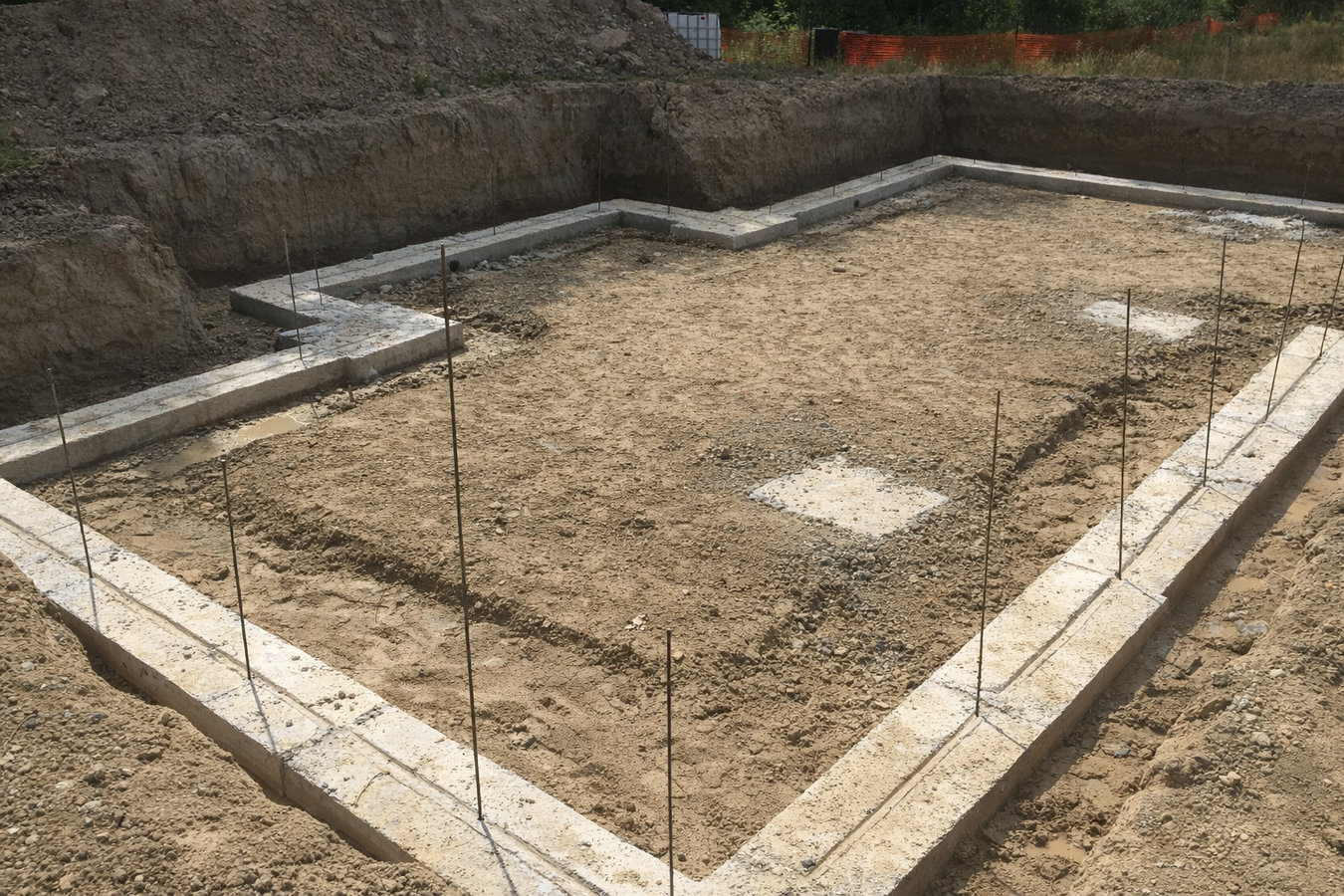
Shallow footings fail in Manhattan winters - we pour below the 24-inch frost line so your deck, porch, or addition stays level and connected for the long haul.
Concrete footings in Manhattan are the buried anchor points that transfer the weight of a deck, porch, addition, or outbuilding down into stable ground - and most residential footing projects take one to two days of active work, with a seven-day curing window before framing can begin. In Manhattan, KS, the frost line sits around 24 inches below grade, which means any footing poured shallower than that will get pushed around by the ground freezing and thawing each winter. Depth is what separates a structure that stays put for 20 years from one that starts pulling away from your house after the first hard winter.
Manhattan homeowners call us for footing work ahead of new decks, room additions, detached garages, and storm shelters - the full range of projects where the structure above is only as good as what is buried beneath it. If your project also involves a new foundation installation, we often assess both in the same site visit and tie the scopes together into a single written estimate.
The City of Manhattan requires a building permit for most footing work, and an inspector will visit before the concrete is poured. That step is a benefit to you - it means an independent confirmation that the depth and placement are correct before anything gets buried.
If you can see a gap forming between your deck boards and the house wall, or if the railing leans outward, the posts may have shifted because the footings beneath them were not deep enough to stay put through Kansas winters. This is one of the most common footing failures in this region, and it tends to get worse each year if left alone.
If a deck post, fence post, or porch column is no longer plumb - it leans to one side or has sunk lower than the others - the footing beneath it has likely failed or was never adequate. In Manhattan's clay soils, this can happen when a footing was poured too shallow or without enough width to resist the soil's seasonal movement.
If you are adding a deck, room addition, detached garage, or storm shelter, new footings are almost certainly required before any framing begins. This is not optional - it is the foundation of everything that comes after. Skipping or undersizing footings will cause problems that are expensive to fix once the structure is built.
Horizontal or stair-step cracks near the base of a porch wall, retaining wall, or foundation stem wall can indicate that the footing beneath is moving or settling unevenly. In Manhattan, this is often related to the clay soil expanding and contracting with moisture changes through the year - and it usually worsens each season without intervention.
We handle the full process from the first permit application through the pre-pour city inspection and final curing. That means digging holes or trenches to the correct depth for Manhattan's frost line - at least 24 inches below grade - setting tube forms or wood forms, placing rebar reinforcement where the project requires it, and pouring a mix designed for Kansas climate conditions. We schedule the city inspector visit before any concrete goes in, so you have an independent confirmation on record that the work meets local requirements. When your project is tied to a larger scope - such as a full foundation installation or a slab pour - we assess everything in one site visit.
We work on residential projects of all sizes, from single deck post footings to full perimeter trench footings for room additions. For homeowners with older properties near Kansas State University where previous additions may have been built to shallower standards, we assess the existing footings and give you an honest picture of what needs to be addressed before tying new work to old. If the scope also includes foundation work, we provide a single estimate covering both phases.
Best for homeowners building new or replacing decks and porches - post footings dug to Manhattan's frost line so the structure stays level through every Kansas winter.
Best for room additions, attached garages, and accessory structures where the footing must carry real load and tie into existing construction.
Best for homeowners in Manhattan's tornado-active season building below-grade or above-grade safe rooms that require especially robust anchor footings.
Best for owners of older homes near K-State or in established Manhattan neighborhoods where prior additions may have been built to shallower or outdated standards.
Two forces work against footings in Manhattan more aggressively than in many other parts of the country. The first is frost depth - the ground freezes to roughly 24 inches in a typical Kansas winter, and any footing above that line gets pushed upward by the freezing ground and drops back down when it thaws. Run that cycle through ten winters and even a well-built structure on shallow footings will show the damage. The second force is the clay soil that covers much of Riley County. That soil swells when it absorbs spring rain and shrinks back in dry summer months, and it does this year after year under any structure you build. A footing sized correctly for those soil conditions - wide enough at the base, deep enough to stay below the active frost zone - absorbs that movement without transferring it upward. A footing that cuts corners on depth or diameter passes that movement directly into your deck, porch, or addition.
We serve homeowners and property owners throughout Manhattan and the wider region, including Junction City and Abilene. Every footing project we take on follows the American Concrete Institute standards for mix selection and reinforcement, and all permit and inspection coordination goes through the City of Manhattan Community Development department. We also follow Kansas Department of Labor requirements for all work where contractor registration applies.
We reply within one business day and schedule an on-site visit. We look at soil conditions, measure placement, check access for equipment, and ask about the structure you are building. You receive a written estimate within a day or two that explains what is included and why - not just a number.
For most projects in Manhattan, we pull the building permit through the City Community Development office before any excavation starts. You may need to sign as property owner, but we handle all paperwork. The permit protects you by creating a record of the work - which matters when you sell the home.
On the day of work, we dig holes or trenches to at least 24 inches below grade - Manhattan's frost line depth. We set forms and place rebar reinforcement inside the holes before the city inspector arrives to confirm depth and placement. Nothing is poured until that inspection clears.
After inspection, the concrete goes in and the crew levels the tops so they are ready to receive posts or framing. Most residential pours take a few hours. The concrete needs about seven days to reach working strength - we give you a specific timeline so the next phase of your project can move forward without unnecessary waiting.
We walk your property, explain exactly what your project needs, and give you a written estimate you can rely on. Most inquiries get a response within one business day.
(785) 236-2117Manhattan's frost line sits at roughly 24 inches, and we dig to that depth on every footing job - no exceptions. That is the number that determines whether your structure stays level through Kansas winters or starts shifting after the first hard freeze. The city inspector confirms it before we pour.
We size footings for the expansive clay soils common across Riley County - wider bases where soil movement demands it, rebar reinforcement where load requires it. A footing that is just deep enough but too narrow for local soil conditions will still fail over time.
We schedule the city pre-pour inspection on every permitted project. That means an independent inspector confirms depth and placement before anything is buried - creating a paper trail that protects you whether you stay in the home for 20 years or sell it next year. We do not pour until that inspection is cleared.
We work across 12 cities in central and eastern Kansas, with deep familiarity in the Manhattan area - including the neighborhoods near Kansas State University where many homes have older additions built to shallower footing standards. If you are tying new work to old construction, we assess the existing footings honestly before recommending next steps.
Every footing we pour starts with a site walk, goes through a city inspection, and finishes with a clear timeline for when you can build on it. That process protects your investment at every step - before, during, and after the concrete goes in.
When an existing foundation has settled or shifted, raising it back to level is a complement to new footing work on adjacent additions or structures.
Learn moreFor projects that go beyond individual post footings and require a full perimeter or slab foundation, we assess and quote both scopes in a single site visit.
Learn moreManhattan's frost season arrives fast - get your project planned now so we can schedule your pour in the right weather window before the calendar fills up.