Loading...
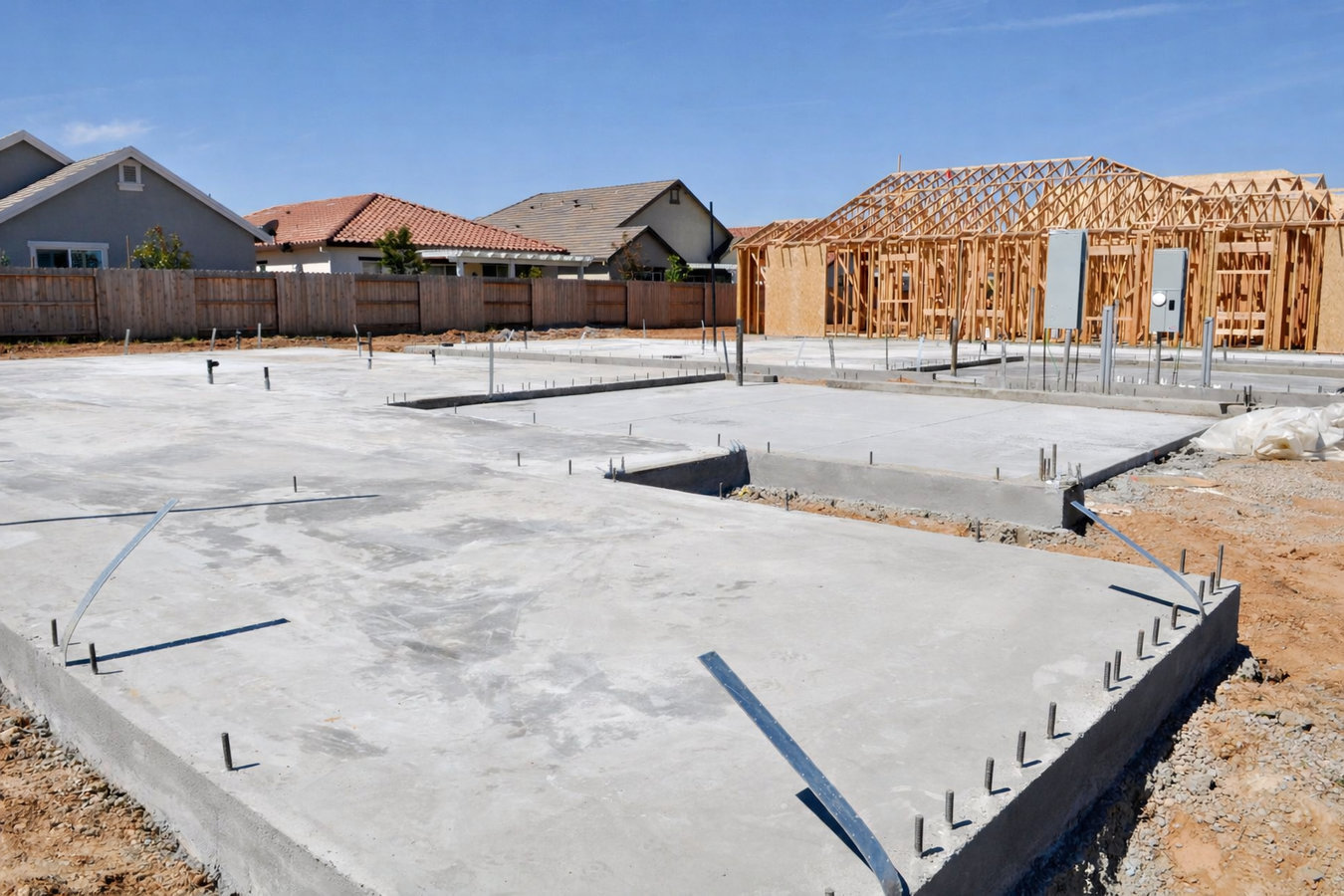
Your foundation carries everything above it. We install foundations built for Manhattan's clay soil, frost line, and local drainage requirements so your home stays level for decades.
Foundation installation in Manhattan covers the full process from excavation to finished, inspected concrete - most residential foundation projects run two to four weeks from first dig to a passed city inspection, depending on type, size, and weather. The process includes digging to below the frost line, setting reinforced forms, pouring ready-mix concrete, waterproofing the exterior, and backfilling with proper drainage away from the house.
Manhattan homeowners starting a new build or replacing a failing foundation need a contractor who understands the clay-heavy soils around Riley County, the Kansas River floodplain drainage concerns in lower parts of the city, and the City of Manhattan's permit and inspection process. Getting any of those three things wrong leads to a foundation that shifts, takes on water, or fails a future inspection. For projects focused specifically on a concrete slab-on-grade, our slab foundation building service walks through that process in full detail.
We handle every permit through the City of Manhattan Building Inspection Division before a shovel goes in the ground. For commercial or large-scale projects where a parking area is part of the scope, our concrete parking lot building service can be paired with foundation work for a single coordinated contract.
If doors are sticking, dragging, or windows no longer sit flush in their frames, the house may be shifting at the foundation level. In Manhattan, clay soils expand and contract with seasonal moisture changes, and this kind of movement is worth having a professional look at before it gets worse.
Diagonal cracks running from the corners of windows or doors toward the ceiling often indicate one part of the foundation is settling at a different rate than the rest. If you notice these cracks appearing or growing - especially after a wet spring or dry summer, both common in Manhattan - it is a signal worth taking seriously.
Standing water, damp walls, or a musty smell after heavy rain means your foundation's drainage is failing. Manhattan's clay soils hold water rather than letting it drain away quickly, increasing pressure on foundation walls and the risk of moisture getting through. This problem does not fix itself and tends to get worse each season.
A visible gap or separation where your home's framing meets the top of the foundation wall - from inside the basement or at ground level outside - means the foundation has moved enough to create a visible break. This is a more advanced warning sign. Do not wait on this one.
We install poured concrete foundations for new residential construction, additions, and replacement projects - handling everything from the initial excavation and grading through the final waterproofing and backfill. That scope includes digging below the frost line into stable bearing soil, setting rebar inside concrete forms, pouring the walls or slab, applying a waterproofing membrane to the exterior before backfill, and grading the surrounding soil to drain water away from the house rather than toward it. Every installation includes the City of Manhattan permit and all required inspections so your project is fully documented. For slab-on-grade projects specifically, our slab foundation building service covers that scope in detail, including sub-base prep and vapor barrier.
Foundation work is also often the first step of a larger project. For commercial builds or properties where a paved surface is part of the plan, our concrete parking lot building work can be coordinated with the foundation phase so grading and drainage are designed together from the start rather than retrofitted after the fact.
Best for homeowners and builders starting from scratch on a vacant lot who need a fully permitted, inspected concrete foundation before framing begins.
Best for homeowners who want usable space below grade - extra storage, living area, or a storm shelter - as part of a new build or major addition.
Best for homeowners adding onto an existing home where a crawl space design fits the lot grade and the project budget better than a full basement.
Best for homeowners whose existing foundation has cracked significantly, settled unevenly, or is taking on water and needs to be rebuilt to current standards.
Manhattan's geography creates two challenges that out-of-town contractors often underestimate. First, Riley County clay soils are expansive - they swell significantly when wet and shrink when dry, putting lateral and vertical pressure on anything buried in them. Footings that are not set deep enough and walls that are not properly drained will move, crack, and eventually fail. Second, Manhattan's frost depth runs 24 to 30 inches in a typical winter, which means footings that work fine in a milder climate will heave here if they are not deep enough. The City of Manhattan Building Inspection Division enforces these standards through its permit and inspection process - which is another reason to hire locally and let your contractor handle that relationship.
Parts of Manhattan near the Kansas River and Wildcat Creek also sit in or near designated flood zones, where drainage design is especially critical. We check flood zone status for every project before quoting. We serve homeowners across the region, including Emporia to the south and Topeka to the east, where similar soil and frost considerations apply. The Kansas Department of Labor maintains contractor licensing requirements that protect homeowners when hiring for foundation work.
We ask about your project type, lot location, and timeline. Most homeowners hear back within one business day, and we schedule a site visit before giving any pricing - because soil conditions and lot access affect cost more than any online calculator can.
We walk your lot, check soil and drainage conditions, look for flood zone considerations near the Kansas River corridor, and measure the scope. You get a written quote that itemizes labor, materials, waterproofing, permits, and cleanup separately so you can compare accurately.
We apply for the City of Manhattan building permit before any digging starts. Once approved, the crew excavates to below the frost line, sets up forms and reinforcement, and prepares the site. Expect equipment and displaced soil in your yard for several days during this phase.
The concrete is poured, the city inspector visits before any soil goes back in, and the exterior is waterproofed before backfilling. We grade the surrounding area so water drains away from the house. You get a copy of the permit and inspection records when the job is done.
Free site visit, written itemized quote, and we handle every permit before work begins. No guesswork, no surprise costs.
(785) 236-2117Manhattan's ground freezes 24 to 30 inches deep in a typical winter. We dig to that depth on every foundation project - not just the ones where the inspector is watching. Footings above that line will shift with the freeze-thaw cycle and cause problems that show up years later.
Waterproofing the exterior of a foundation wall before backfilling is not optional - it is what keeps moisture out of your basement for the life of the house. We include it in every foundation quote, so you are not surprised by a line item that appears after you have already signed.
The City of Manhattan requires permits and inspections for all foundation work. We apply before work starts, we are on site for every inspection visit, and we hand you a complete permit and inspection packet when the project is finished. That documentation protects you when you refinance or sell.
Parts of Manhattan near the Kansas River and Wildcat Creek sit in or near flood zones where foundation drainage design is held to a higher standard. We check your property's flood zone status before quoting - so the drainage plan we build is the right one for your lot, not a generic approach. The American Concrete Institute sets the technical standards we follow on every reinforced concrete foundation.
A foundation is the one part of your home you cannot easily go back and fix after the fact. Getting it right from the start - proper depth, proper reinforcement, proper drainage, and proper documentation - is the only approach we know.
Poured concrete parking lots for commercial properties, churches, and multi-unit buildings that need a durable paved surface to complement new construction.
Learn moreFocused slab-on-grade foundation pours for new homes, garages, and additions where a flat concrete pad is specified as the structural base.
Learn moreManhattan contractors fill their calendars fast once the weather turns - call now for a free site visit and written estimate, and lock in a start date before the season gets away from you.