Loading...
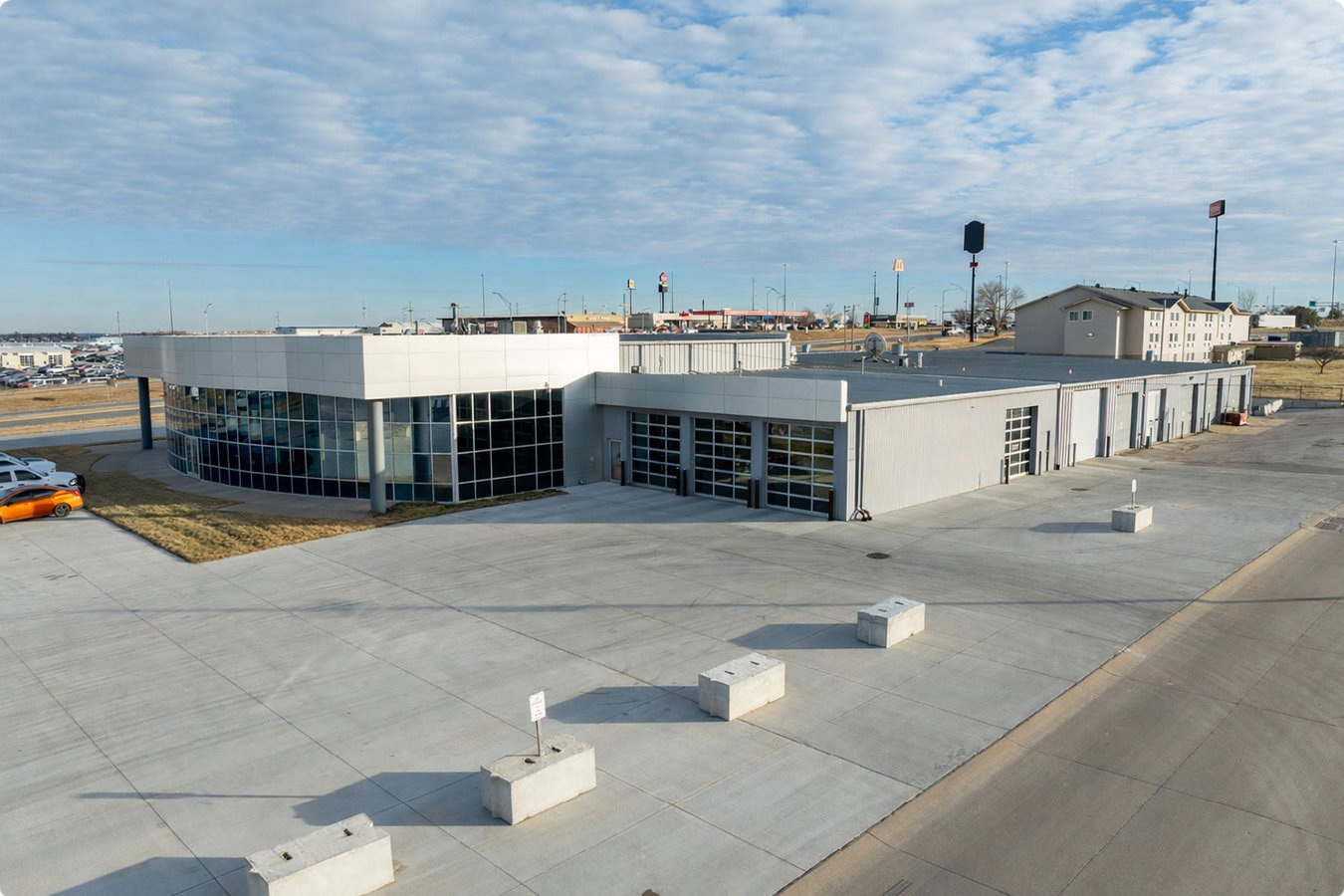
Mud, gravel, and cracked asphalt are a hassle every season - we pour concrete parking lots built for Manhattan clay soils, freeze-thaw winters, and real daily use.
Concrete parking lot building in Manhattan means excavating the existing surface, compacting a stable gravel base, setting forms, pouring a reinforced slab, and finishing with control joints and a slight drainage slope - most residential and small commercial lots take two to four days of active work, with a curing period of three to four weeks before regular vehicle traffic. A properly built lot should last 30 to 40 years with basic sealing maintenance, and the base preparation is what determines how long it actually holds up through Manhattan winters.
Manhattan property owners call us for everything from replacing a deteriorated gravel lot to building a new paved area alongside a garage addition. If you are also planning a new concrete driveway, combining both projects saves on mobilization and typically results in a more consistent finished look across your property.
We handle the permit process with the City of Manhattan and coordinate drainage requirements from the start - so you are not dealing with compliance issues after the concrete is already poured.
If you have patched cracks before and they keep coming back - or new ones keep forming nearby - the surface has reached the end of its useful life. When cracks are spreading across the whole area, the base underneath has usually failed. Patching can buy time, but it will not fix the underlying problem permanently.
Manhattan's freeze-thaw winters and clay-heavy soils are a tough combination. If sections of your parking area have lifted, buckled, or sunk after a hard winter, the ground underneath has shifted in a way that patching cannot correct. That kind of movement creates a tripping hazard and will only get worse each season.
Pooling water means the surface is no longer draining the way it should - either because settling has changed the slope, or because the surface has deteriorated enough to hold water. In Manhattan's climate, that pooled water will freeze in winter and speed up surface damage. It also creates a slip hazard every time it rains.
Many older properties in and around Manhattan still have unpaved or gravel parking areas that turn to mud every spring, create dust in dry months, and wash gravel into the street after heavy rain. A concrete surface solves all of those problems at once and gives the property a cleaner, more finished look year-round.
We handle the full scope from demo to finish - removal of existing material, excavation to the correct depth for Manhattan soils, compaction of a gravel base, forming, pouring a reinforced slab, cutting control joints, and finishing with the proper drainage slope. We pull all required permits from the City of Manhattan Development Services office and handle inspection scheduling so you never have to make a single call to the city. When lot size or configuration calls for drainage structures, we design that into the project from the start - not as an afterthought. If the project also includes a concrete driveway, we fold it into the same estimate and pour.
We work with both homeowners adding organized parking for the first time and commercial property owners replacing aging asphalt or gravel surfaces. For properties that also need concrete footings for a nearby garage addition or structure, we can assess and quote both in a single site visit, keeping your project timeline tight.
Best for properties replacing gravel or dirt parking areas for the first time - includes full base build, drainage design, and permit handling.
Best for deteriorated asphalt or concrete lots that have reached the end of their life - full removal and replacement with a properly prepared new slab.
Best for homeowners or businesses adding more parking stalls to an existing paved area - matched finish and drainage tie-in to the existing surface.
Best for small business owners and property managers needing a durable surface rated for delivery trucks and heavier vehicle traffic.
The Flint Hills geology that runs through Riley County gives Manhattan its landscape - and its difficult soils. The clay-heavy ground swells when wet and shrinks when dry, which puts constant stress on any paved surface sitting on top of it. A contractor who does not excavate deep enough or compact the base correctly is handing you a parking lot that will crack and settle within a few winters. On top of that, Manhattan's freeze-thaw cycle - temperatures regularly swinging above and below freezing from November through March - is one of the harshest conditions concrete faces. The combination means base prep and a properly designed drainage slope are not upsell items here, they are what makes the difference between a lot that lasts 30 years and one that fails in five. Manhattan's steady growth around Kansas State University and Fort Riley also means the city's Development Services office processes a real volume of permits, so working with a contractor who submits a complete application the first time saves weeks off your project timeline.
We regularly serve homeowners and property owners across Manhattan and the surrounding region, including Junction City and Salina. For all paving projects we follow American Concrete Pavement Association standards on base preparation and joint placement, and we design drainage to meet the City of Manhattan stormwater management requirements from day one.
We reply within one business day to schedule a visit to your property. We measure the area, assess soil and drainage conditions, and ask how the lot will be used - that on-site look is what allows us to give you a written estimate with real numbers, not a phone-call ballpark that changes when work begins.
We apply for the required City of Manhattan building permit before any work begins. You do not visit any office - we handle the entire application. Depending on the season, plan for permit review to take one to three weeks, so we confirm your project start date once the permit is approved.
On the first day of work, the crew excavates the existing surface, removes old material, and compacts a gravel base layer to the correct depth for Manhattan's clay soils. This is the most important part of the job - a well-prepared base is what determines how long the finished lot holds up.
Once the base is set and forms are in place, we pour and finish the slab in a single day for most residential lots - including saw-cut control joints and a drainage slope built in. The concrete then needs three to four weeks of curing before regular vehicle traffic, and we give you a clear timeline based on the weather at the time of your pour.
We visit your property, assess the soil and drainage, and give you a written estimate - no phone-call ballparks. Most inquiries get a response within one business day.
(785) 236-2117We excavate and compact specifically for the expansive clay soils common across Riley County - not a generic base depth used everywhere. That means your slab does not crack and settle after the first wet spring because the ground moved underneath it.
We file the City of Manhattan permit application, submit all required documentation, and schedule the city inspection - all without you making a single call to the Development Services office. You get notified when the permit is approved and when the inspection passes.
Manhattan gets significant spring rain and severe summer storms. We design a drainage slope into every lot we build - because a flat surface that pools water is a problem every single season. Our lots meet the city's stormwater management requirements from day one.
We serve homeowners and property owners in Manhattan and 11 surrounding cities. That regional footprint means we understand how local soil conditions, permit processes, and weather patterns differ across central and eastern Kansas - and we price and plan projects accordingly. The Portland Cement Association guidelines we follow on mix selection and base preparation reflect current best practices, not outdated habits.
Every parking lot we build starts with an on-site assessment and ends with a city inspection - two checkpoints that protect your investment before and after the concrete is poured. That combination of local soil knowledge, proper permitting, and independent inspection is what makes the difference between a lot you call about in three years and one that holds for three decades.
When your parking lot project includes a nearby garage or structure addition, proper footings are the buried anchor that keeps everything stable through Kansas winters.
Learn moreMany parking lot projects pair naturally with a new driveway approach - combining both in a single pour keeps costs down and gives you a consistent finished surface.
Learn moreThe concrete season in Manhattan is shorter than most people realize - reach out now and we will schedule an on-site visit before the calendar fills up.