Loading...
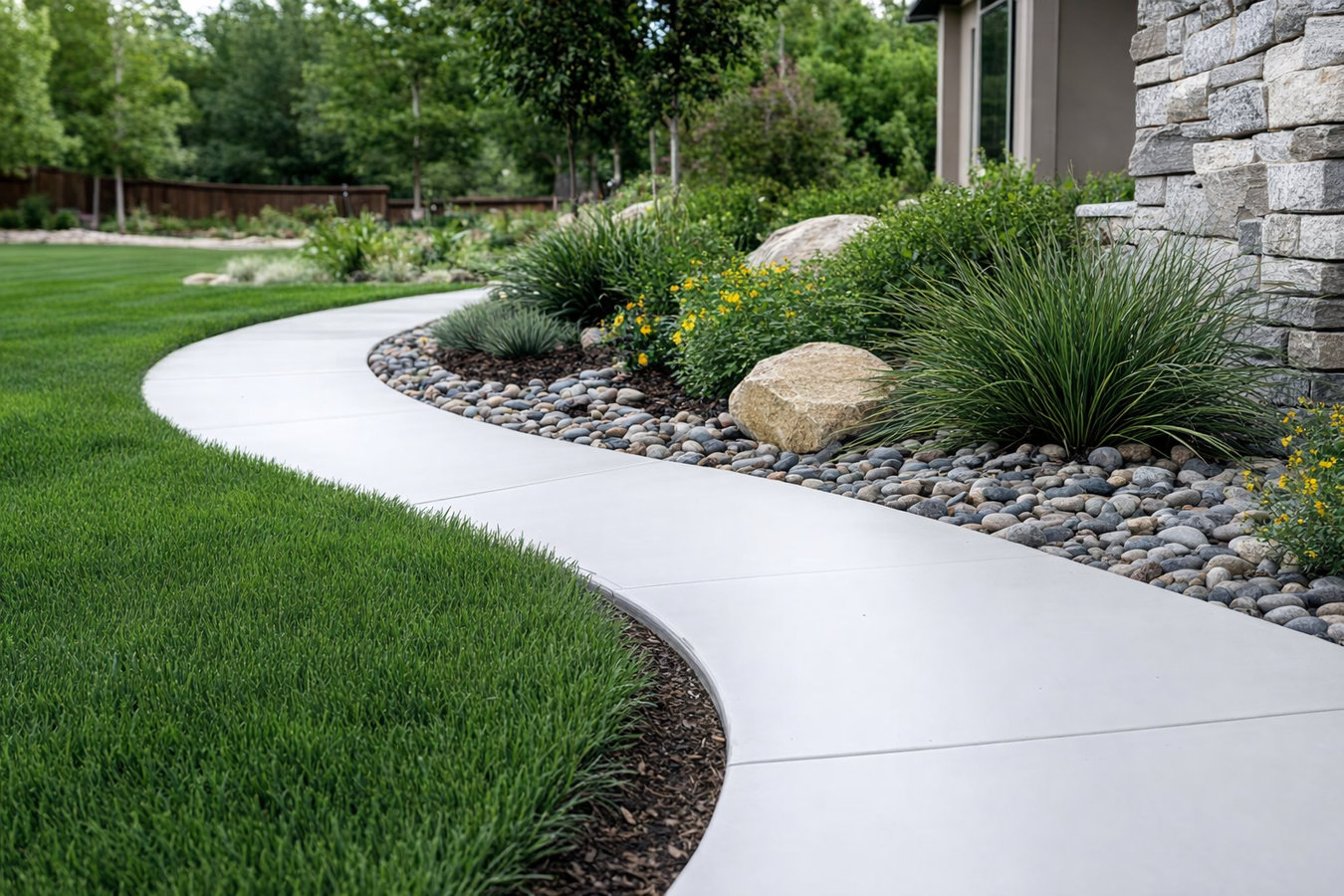
Cracked, heaving, or pooling sidewalks are a hazard and an eyesore - we replace them with new concrete built for Manhattan's clay soils and seasonal temperature swings.
Concrete sidewalk building in Manhattan means removing the old surface, compacting the base, setting forms, pouring, and finishing with a textured surface that drains and grips - most residential projects take one to two days of active work, and the walk can handle light foot traffic within 48 hours. A properly built sidewalk should last 30 to 50 years with basic maintenance, and the quality of the base preparation is what separates one that holds from one that cracks within a few winters.
Manhattan homeowners most often call us for front walkways that have heaved or crumbled, side paths from driveways to back doors, and full front-yard sidewalk replacements on older properties near campus and downtown. If your property needs a new concrete driveway as well, combining both projects is common and usually saves on mobilization cost.
If you also need work done inside the garage or on the garage slab itself, we handle garage floor concrete as well - some homeowners tie it into the same visit and estimate.
Hairline cracks are normal in older concrete, but once a crack is wide enough to catch a shoe or let water pool inside it, you are past the point of patching. Water that gets into wide cracks will freeze in Manhattan's winters, expand, and make the crack noticeably worse by spring. That cycle repeats until the slab is no longer worth saving.
A noticeable bump or step between two sections of your sidewalk means the clay soil underneath has shifted and pushed a slab upward. This is especially common in Manhattan after wet springs followed by dry summers. It is the kind of hazard that causes falls - and a liability concern if someone trips on your property.
A properly built sidewalk angles slightly so rainwater runs off to the side. If you see puddles sitting on your walk after rain, the surface has either settled unevenly or was never graded correctly. Standing water speeds up surface wear and turns into ice in winter - a problem right at your front door.
If the top layer of your concrete is peeling off in thin chips or the surface looks pocked and rough, that is called spalling. It often happens when road salt or de-icing products have been used repeatedly, which is common in Manhattan neighborhoods where homeowners try to keep walks clear during icy winters. Once spalling covers a large area, replacement is the practical answer.
We handle the full scope - demo and removal of old concrete, utility marking through Kansas 811, base compaction with gravel if needed, forming, pouring, finishing with a broom texture for slip resistance, and control joint placement timed for Manhattan's temperature range. If your project touches the city right-of-way, we pull the permit from the City of Manhattan's Public Works department and handle all coordination. We also tie in driveway work when homeowners want to do the whole front property in one project.
We build sidewalks in all the established Manhattan neighborhoods - the older homes near K-State and Aggieville that are on original 1950s-1970s concrete, and the newer subdivisions on the north and west sides where homeowners are adding paths for the first time. For properties with grade changes or drainage issues that go beyond the sidewalk itself, we can tie in garage floor and other concrete work as part of a single assessment and written estimate.
Best for homeowners with original concrete from the 1970s-1990s that is cracked, heaved, or crumbling - full removal and replacement with properly sloped new concrete.
Best for newer homes or properties adding a path for the first time - front walks, side yard paths, or connections to driveways or outbuildings.
Best for homeowners whose sidewalk runs along the street and connects to the city's pedestrian network - includes permit filing and city coordination.
Best for properties near Kansas State University or Aggieville where pedestrian use is heavier and the city may have specific width or finish requirements.
Much of Riley County sits on expansive clay soil - the kind that swells when wet and shrinks when dry. That movement is the main reason concrete sidewalks in Manhattan fail faster than homeowners expect. A contractor who skips proper base compaction or does not account for the soil behavior is setting you up for cracks and uneven sections within a few years. On top of that, Manhattan's freeze-thaw cycles - dozens of hard freezes each winter followed by spring thaws - put constant stress on any concrete surface that was not built with those swings in mind. The combination of difficult soil and a harsh climate means that base preparation is not optional here, it is the whole game.
We serve homeowners from the older neighborhoods near downtown Manhattan all the way out to Junction City and Abilene. Before any work near the city right-of-way, we check Manhattan's Public Works permit requirements and handle any filing needed. We also follow Kansas 811 utility marking requirements before any digging starts on every single job.
Tell us roughly how long and wide the walk is and whether you are replacing an existing one or starting fresh. We will schedule a free on-site visit - we never quote sidewalk work over the phone without seeing the site first. Expect a reply within one business day.
We check the slope, existing surface condition, and soil under the area. If your project touches city right-of-way, we confirm the permit requirements before you sign anything. You get a written price that covers demo, base prep, pour, and finishing.
If a City of Manhattan permit is needed, we file it. Kansas 811 marks utility lines before any digging. On the start day, the crew removes old concrete if needed, compacts the soil, adds gravel if the base requires it, and sets up forms with the right slope for drainage.
The pour and finishing usually take a few hours for a standard residential sidewalk. We add control joints and a broom finish for traction. Before we leave, we walk the finished work with you, mark it off for curing time, and explain what to avoid the first winter - including de-icing salts.
Free on-site estimate. Written quote before we start. Permits handled for you.
(785) 236-2117Riley County's clay-heavy soil expands and contracts more than most, and it is the main reason sidewalks in Manhattan heave and crack prematurely. We compact the subbase and add gravel drainage on every job - the prep work that keeps a slab stable through wet springs and dry summers alike.
If your walk touches the strip of land between your yard and the street, the City of Manhattan requires a permit. We file that paperwork ourselves, communicate with the city's Public Works department, and make sure the finished work meets every local requirement - so there are no issues when you go to sell.
Kansas law requires contractors to call 811 before any digging to have underground utilities marked. We follow this step on every sidewalk project without exception - protecting your home, your neighbors, and the crew from accidental damage to gas, water, or electrical lines.
We have worked across Manhattan's neighborhoods since 2023 - from the older homes near the K-State campus to the newer subdivisions on the north and west sides. We understand what the city expects for sidewalk work in different parts of town, including the higher-traffic areas around Aggieville where ACI concrete standards for finish quality are especially relevant.
Every project we finish in Manhattan gets a walkthrough before we leave - so you know exactly what was done, what to avoid during the curing window, and what to watch for in the years ahead. Contact us to schedule your free estimate.
Resurface or replace a deteriorating garage slab while the crew is already on your property.
Learn morePair a new front walkway with a full driveway replacement for a complete curb appeal upgrade.
Learn moreSpring booking fills fast - reach out now to lock in your project before the best weather window closes.